How to Choose a Palletizing System for Your Production Line
Choosing a palletizing system is not simply a question of whether to use a robot. For a B2B production manager, packaging engineer, or procurement team, the real decision is whether the system can handle the actual product, reach the required output, fit the available layout, and remain reliable after installation. By the end of this guide, you will know how to choose a palletizing system for your own line. The guide covers cartons, bags, barrels, and other packaged products by focusing on compatibility, throughput, tooling, integration, and service support.
Start With the Production Problem Your Palletizing System Must Solve
A palletizing system combines product infeed, conveying, gripping, pallet positioning, stacking controls, and finished-pallet discharge. The right configuration depends on what is creating the bottleneck in your operation. Manual stacking may be too slow, physically demanding, inconsistent across shifts, or difficult to scale when several packaging lines run at the same time.
Before comparing suppliers, define the job the system must perform. Is the system receiving cartons from a case packer, bags from a filling line, or barrels from a chemical or food-production process? Do you need one fixed pallet pattern or frequent changes between SKUs? Will the equipment serve one line, several lines, or a shared production area? These answers are more useful than choosing equipment by robot model alone.
Your application may also involve food and beverage, pharmaceutical, chemical, logistics, or warehousing operations. Each environment can impose different requirements for cleanliness, guarding, corrosion resistance, traceability, or integration with downstream handling. For a wider view of connected packaging equipment, see the Packaging Production Lines page, then return to the palletizing decision itself.
Compare the Main Types of Palletizing Systems
Standard Robotic Palletizing Systems
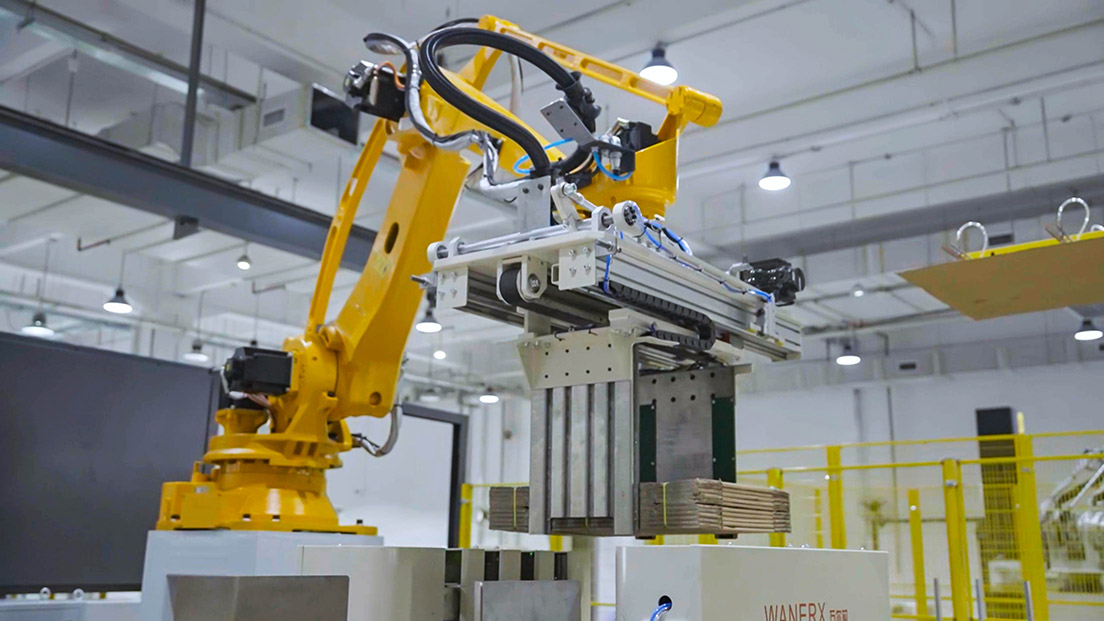
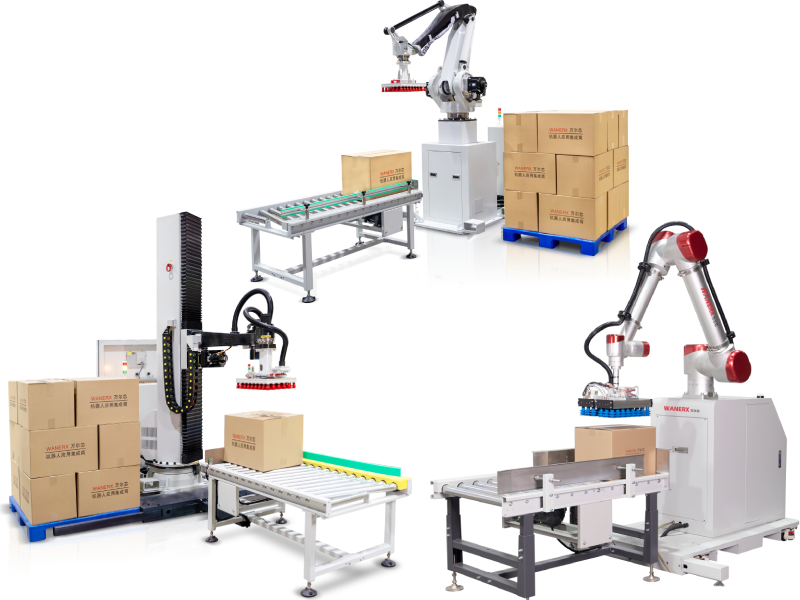
A standard robotic palletizing system is often suitable for repeatable, medium- to high-volume operations. It can provide consistent placement, flexible reach, and recipe-based pattern changes. It is a strong candidate when the line has stable products, a defined pallet position, and a clear target for cases or units per hour.
Collaborative Robot Palletizers
A collaborative robot palletizer may suit lower-volume operations, frequent product changes, or sites where operators work near the equipment. However, “collaborative” does not remove the need for a safety assessment. The supplier still needs to evaluate payload, speed, tooling, reach, access, and the required protective measures. The practical question is whether the required output can be achieved without creating a new bottleneck.
Mobile and Heavy-Duty Palletizing Systems
Mobile palletizing systems can be useful when equipment must move between production areas or serve changing line layouts. Column-type heavy-duty palletizers are more appropriate when products or completed loads are heavy and structural stability is a priority. Review the Robot Palletizing Systems page for a product-specific reference, but request a configuration based on your own product and line data rather than assuming one standard package fits every site.
Match Payload and Product Format to the Palletizing System
Cartons, Bags, and Barrels Need Different Handling
Product format is one of the first compatibility questions. Cartons usually provide a relatively stable gripping surface, while bags may deform, shift, or require support during acceleration and placement. Barrels can have a different center of gravity, surface condition, and stacking behavior. A system designed for rigid cartons may therefore need a different gripper, approach angle, or layer-forming method for bags or barrels.
Provide product length, width, height, weight, material, surface condition, and packaging tolerance. Also explain whether the product can be compressed, tilted, rotated, or picked in multiples. These details help the engineering team select vacuum, clamp, fork, or hybrid tooling instead of offering a generic palletizer recommendation.
Confirm Pallet Pattern and Load Stability
The pallet pattern affects both cycle time and transport safety. State the number of units per layer, number of layers, preferred interlocking pattern, allowable overhang, and final pallet height. If the load will be moved by forklift, pallet truck, or AGV, explain the handling route. A pallet that looks stable at the robot station may still shift during wrapping, storage, or shipment if the pattern does not match the product’s center of gravity.
Calculate Throughput, Cycle Speed, and Line Count
Do not evaluate speed using only a robot’s advertised pick rate. Separate the required product rate, layer-building time, pallet completion time, changeover time, and planned downtime. A useful calculation starts with peak units per minute and converts that demand into completed pallets per hour. Then add a realistic allowance for SKU changes, accumulation, rejected packages, operator access, and maintenance.
The number of lines is equally important. A single palletizing system may serve multiple lines when products, speeds, and pallet patterns are compatible and the conveyor layout provides enough buffering. Dedicated systems may be better when lines run continuously, products differ substantially, or one line cannot wait for another. Ask the supplier to show the proposed routing, buffer capacity, priority logic, and what happens if one incoming line stops.
For example, a plant with several moderate-speed lines may value balanced buffering more than maximum robot speed. If the palletizer receives products in uneven bursts, the accumulation zone must absorb those variations without stopping upstream equipment. Ask for the expected rate during normal production, the peak rate, and the recovery behavior after a short stoppage. This makes the throughput discussion measurable and prevents a system from being selected on a single headline number.
Select the Right Gripper, Conveyors, and Pallet Flow
The end-of-arm tooling should be selected from the product data, not from the robot name. Vacuum tooling may work well for suitable carton surfaces, while mechanical clamps or fork-style tools may provide better control for bags, barrels, dusty products, or irregular loads. Multi-pick tooling can improve throughput, but only when product spacing, weight distribution, and pallet pattern support it.
The conveyor layout is just as important. Confirm product spacing, orientation, accumulation length, layer forming, pallet dispensing, pallet positioning, and full-pallet discharge. Check clearances for forklifts, pallet trucks, AGVs, stretch wrappers, and warehouse doors. If the system will connect to an existing packaging line, provide a layout drawing and photographs of the available space. A technically capable robot can still fail commercially if the infeed, pallet magazine, or discharge path does not fit the site.
Also identify the points where operators must access the equipment. A compact layout is not useful if routine cleaning, film replacement, inspection, or jam recovery is difficult. Ask whether conveyors need height adjustment, whether pallets can be removed without interrupting the next cycle, and how empty pallets are replenished. These practical details determine whether the proposed palletizing system can maintain its intended output during real shifts, not only during a commissioning demonstration.
Evaluate Controls, Changeovers, and After-Sales Support
A B2B buyer should evaluate the complete operating system, not just the mechanical arm. Confirm PLC and HMI integration, recipe management, automatic pattern changes, alarm history, safety fencing, light curtains, scanners, and communication with upstream packaging machines. Ask how operators will select a new SKU and how long a normal changeover should take.
After-sales support is part of system compatibility. Ask who handles installation and commissioning, how operators are trained, which spare parts are recommended, how remote troubleshooting works, and where service support is available. Request preventive-maintenance instructions and documentation that identifies replacement parts clearly. A low purchase price may not be attractive if a missing gripper component or delayed software support creates extended downtime.
Ownership questions should be answered before the purchase order. Clarify which tasks the plant team can perform, which faults require a technician, and what information must be available for remote diagnosis. Ask for the expected training format, recommended critical spares, software backup process, and escalation route for an urgent stoppage. A system is more suitable when its controls can be operated by the available team and its support model matches the plant’s working hours and location.
Information to Prepare Before Requesting a Palletizing System Quote
A complete RFQ helps suppliers propose a workable system instead of sending a generic product brochure. Prepare the following information:
|
Information to prepare |
Why it matters |
|
Product type: carton, bag, barrel, or other |
Determines gripping and handling method |
|
Product dimensions and weight |
Confirms payload, reach, and tooling requirements |
|
Required throughput and peak rate |
Establishes cycle-speed and capacity targets |
|
Number of production lines |
Defines single-line or multi-line architecture |
|
Pallet size and preferred pattern |
Sets layer-forming and stacking requirements |
|
Current layout and available height |
Checks robot reach, conveyors, and clearances |
|
SKU count and changeover frequency |
Influences recipe control and tooling flexibility |
|
Site utilities and operating environment |
Supports installation and compliance planning |
|
Target implementation date |
Aligns engineering, manufacturing, and commissioning |
Send these details through the contact page or WhatsApp when requesting an initial discussion. Include product samples or videos where possible, because shape, flexibility, and surface condition can be difficult to judge from dimensions alone.
Use This Checklist to Choose a Palletizing System
Before selecting a supplier, confirm that you can answer each question: What products will be stacked? What are their dimensions, weights, and handling limits? What is the peak throughput? How many lines must the system serve? Which pallet patterns are required? What gripper and conveyor interfaces are needed? How much floor space and height are available? How will the system connect to upstream and downstream equipment? What safety standards and site conditions apply? Finally, what installation, training, spare-parts, and service response will be provided?
Use the answers to compare proposals on the same basis. Check whether each supplier has stated assumptions about product weight, speed, pallet height, changeover time, and operator involvement. Ask which items are included in the quoted scope and which are excluded, such as conveyors, safety guarding, pallet magazines, wrapping equipment, installation, or commissioning. This prevents a low initial quote from being compared with a more complete solution on an unfair basis.
The best palletizing system is not automatically the fastest robot or the lowest quoted price. It is the configuration that matches your products, output, line count, layout, changeover needs, and long-term support requirements. If you prepare the operating data before requesting a proposal, the supplier can focus on a feasible layout and a useful RFQ instead of guessing at the application.